Anti-termite
Pre-Construction Anti-Termite Treatment: A Builder's Guide to IS 6313
In short
- IS 6313 has three parts: Part 1 (constructional measures), Part 2 (pre-constructional chemical treatment) and Part 3 (existing buildings).
- IS 6313 Part 2 covers chemical soil treatment during construction.
- Treatment happens in stages, from foundation trenches to the outer perimeter.
- Insist on CIB&RC-approved termiticides, a stage-wise record and a treatment certificate.
Subterranean termites live in the soil and travel through hairline cracks, expansion joints and service openings to reach the wood, paper and stored goods inside a building. In much of North India they are the single biggest pest threat to a structure. Once a building is finished, the soil beneath it is hard to reach. During construction, it is wide open.
IS 6313 Part 1, Part 2 and Part 3 explained
The Bureau of Indian Standards code IS 6313, on anti-termite measures in buildings, has three parts. Tenders and specifications often name just one of them, so it helps to know what each covers and when it applies.
| Part | What it covers | When it applies |
|---|---|---|
| IS 6313 Part 1 | Constructional measures | At design stage, by architects and engineers |
| IS 6313 Part 2 | Pre-constructional chemical treatment of the soil | During construction, stage by stage |
| IS 6313 Part 3 | Treatment of existing buildings | When termites are found in a finished building |
IS 6313 Part 1: constructional measures
Part 1 deals with how a building is designed and built so that termites find it harder to get in, without relying on chemicals alone. Typical measures include a continuous concrete layer at plinth level, sealing the gaps where pipes and conduits pass through floors and walls, and keeping timber out of direct contact with the soil. It works alongside chemical treatment, not instead of it.
IS 6313 Part 2: pre-constructional chemical treatment
Part 2 is the part builders and contractors are most often asked to follow. It sets out which soil must be treated with termiticide while the building goes up, and at which stage, so that the finished building sits inside a continuous chemical barrier. The rest of this guide walks through those stages. It is also what our pre-construction anti-termite treatment follows.
IS 6313 Part 3: treatment of existing buildings
Part 3 covers buildings that are already standing. Because the soil under the floor can no longer be reached directly, holes are drilled along walls and floors, termiticide is injected into the soil below, and the holes are sealed. Infested woodwork is treated separately. This is our post-construction (drill-fill-seal) treatment.
The stages of treatment under Part 2
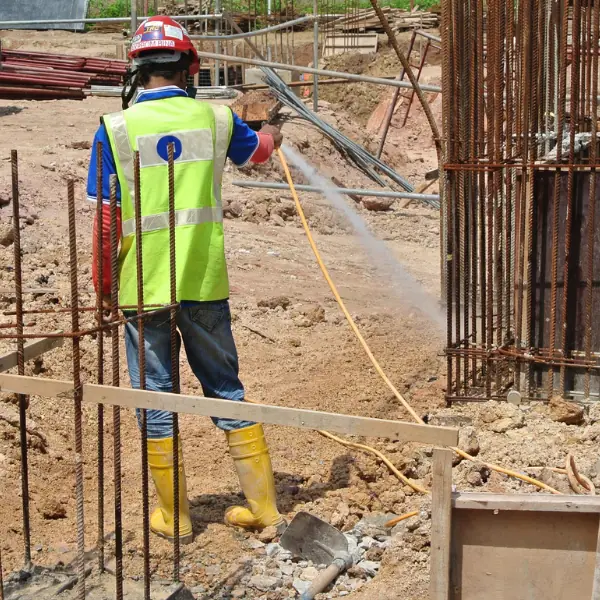
- Foundation trenches and pitsBottom and sides treated before the first concrete is poured.
- Backfill against foundationsSoil treated in layers as it is returned around columns and walls.
- Plinth fill and under-floor soilTreated before the floor slab or PCC is laid.
- Junctions and service entriesPoints where pipes and conduits pass through are given extra attention.
- External perimeterSoil along the outside of the plinth treated at the end to close the barrier.
Timing on site
Coordination is the most common failure. The treatment team needs notice before each stage is covered. A missed stage cannot be fixed later without drilling. We agree a schedule with the site engineer at the start and log each stage with date, area and quantity.
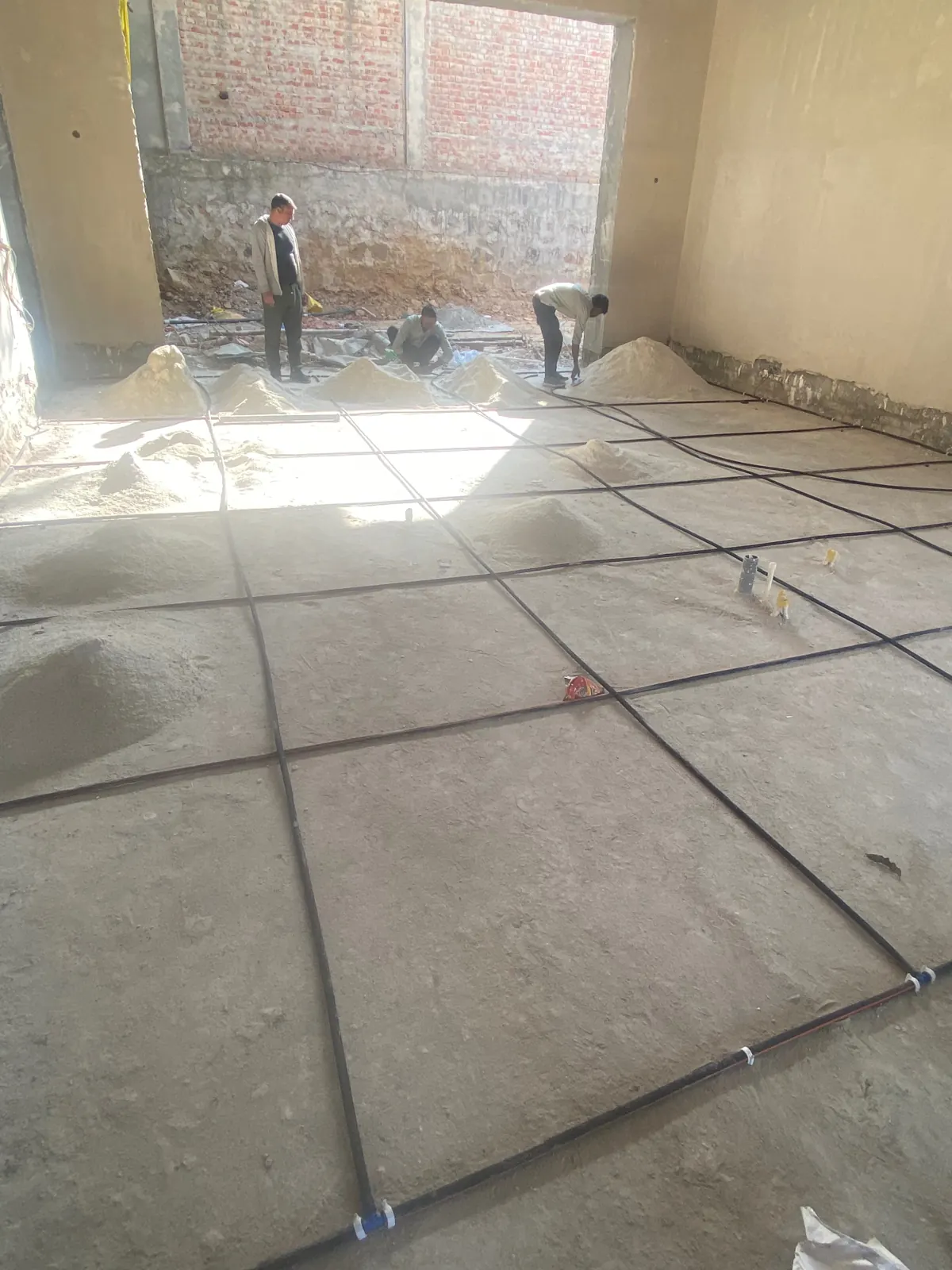
Add termite piping for the long term
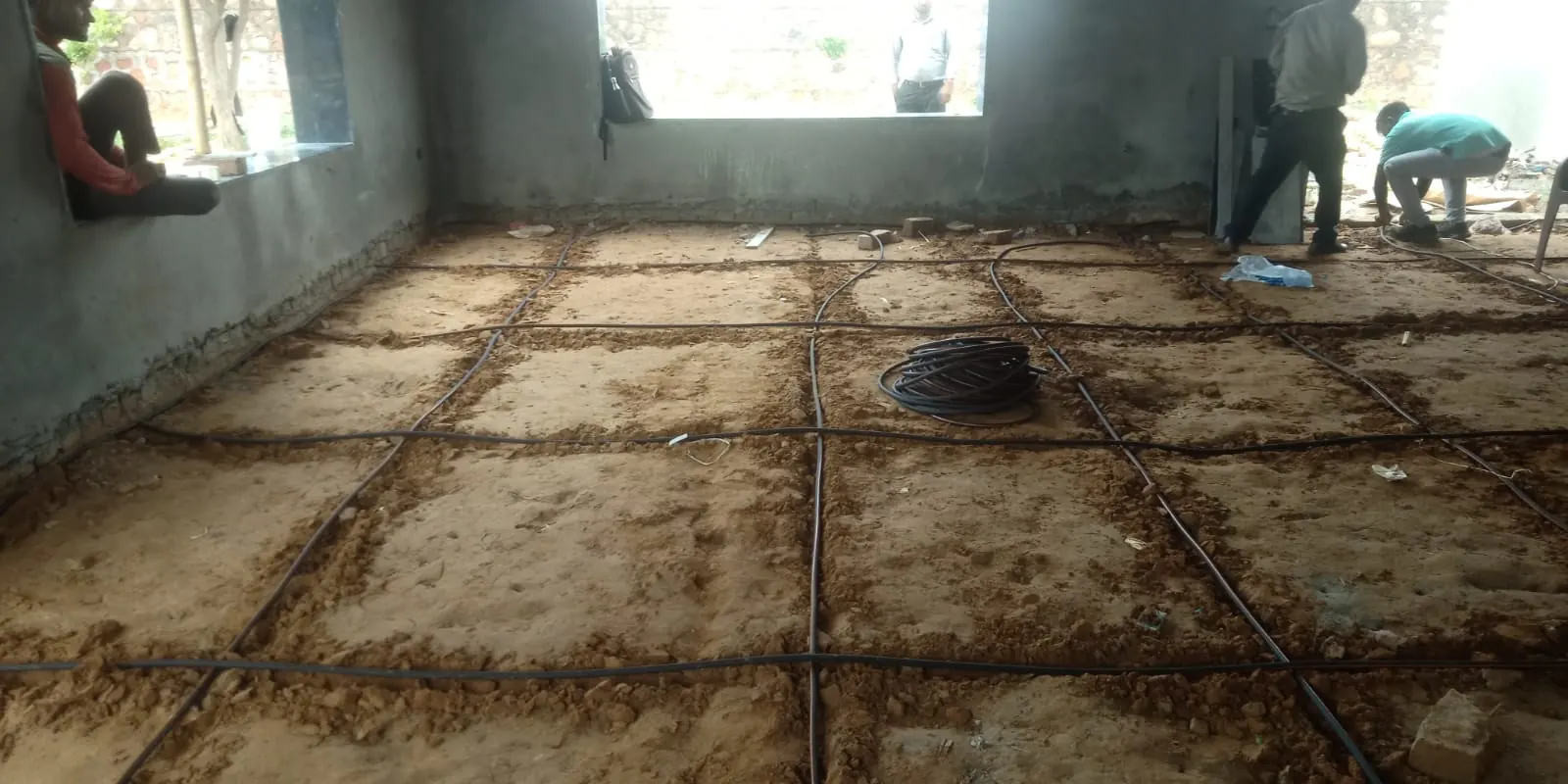
Chemical barriers weaken over the years. Termite piping, laid before flooring, lets the barrier be recharged through refill points without breaking tiles. For villas and premium projects it is one of the best long-term investments.
Our track record
PCES has carried out pre-construction treatment on more than 110 projects, from IGI Airport Terminal 3 and PepsiCo plants to Tata Housing and Omaxe Heights. See the full list of projects, or our pages on anti-termite treatment in Gurgaon and in Delhi.
Call us before the first foundation concrete is poured.